
How to Style Fabric Flowers for a Modern Luxury Wedding
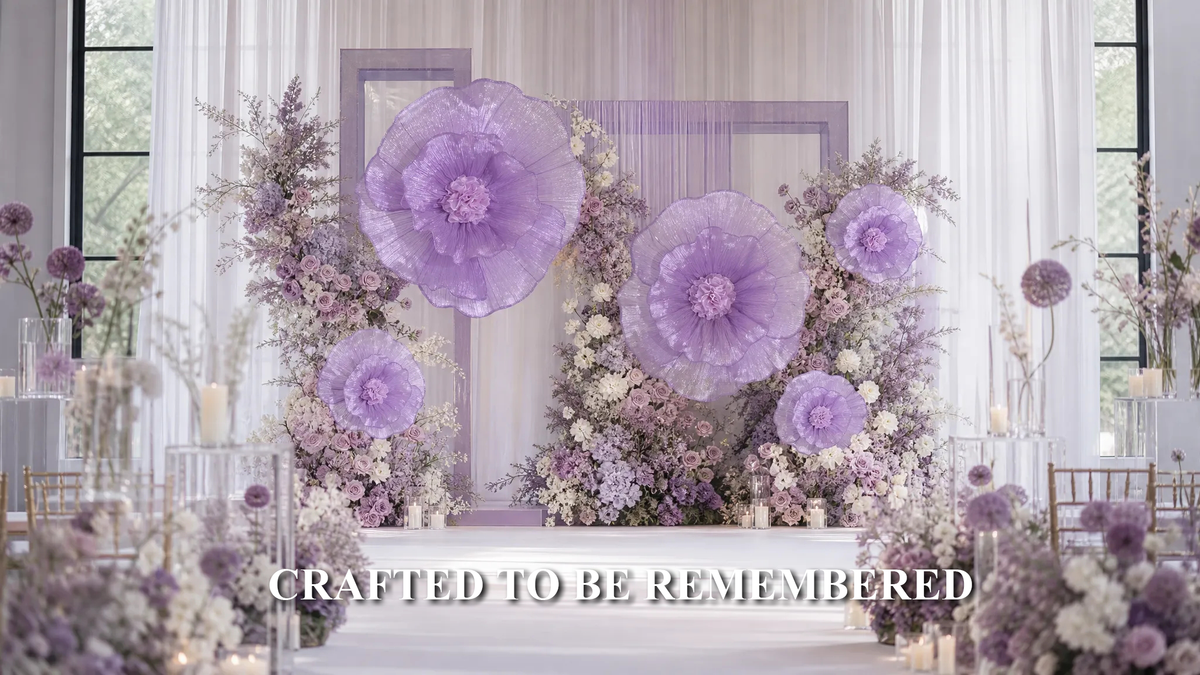
Modern wedding design is moving beyond the idea that flowers simply belong in a bouquet or a centerpiece. Today, floral styling is increasingly part of the architecture, atmosphere, and visual identity of the celebration. Fabric flowers offer an especially versatile approach because they can be shaped, layered, arranged, and styled in ways that feel more sculptural than traditional floral arrangements. When used thoughtfully, they can bring softness and drama to a space while still maintaining the polished feeling expected of a luxury wedding.

The key to making fabric flowers feel sophisticated is not to use them everywhere or make every arrangement oversized. Instead, the most successful designs consider scale, proportion, color, texture, and placement as part of one complete visual story. Whether the wedding takes place in a grand ballroom, an intimate garden, a private estate, or a modern venue, the flowers should feel connected to the space rather than simply placed inside it.
Begin With a Clear Visual Direction
Before choosing individual flowers, start with the overall mood of the wedding. A modern luxury celebration might feel romantic and delicate, dramatic and theatrical, or understated and architectural. Defining that feeling first makes every later decision easier because the flowers, fabrics, furniture, lighting, and table details can all support the same direction.
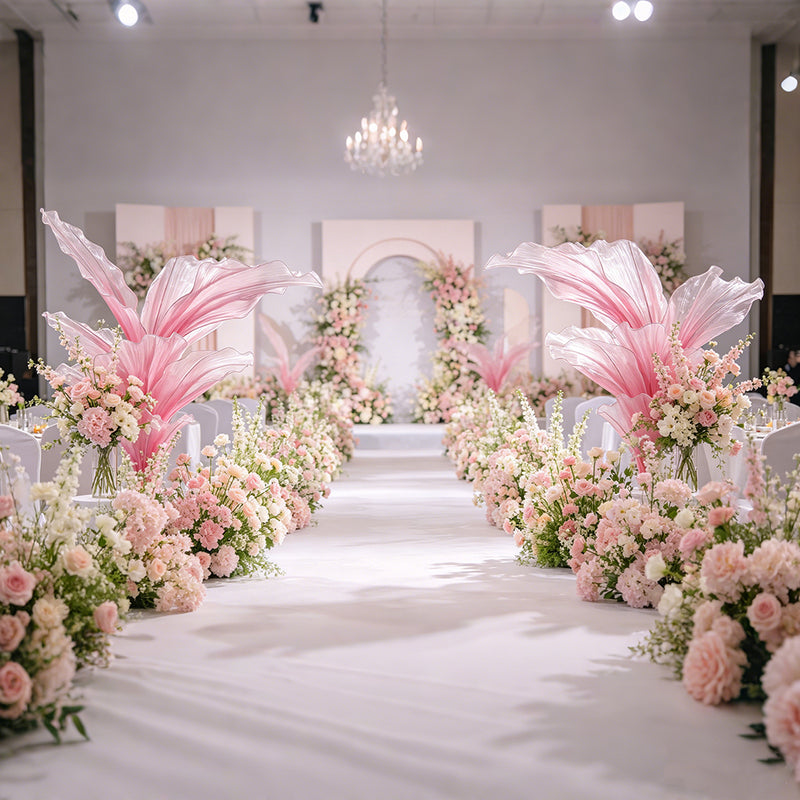
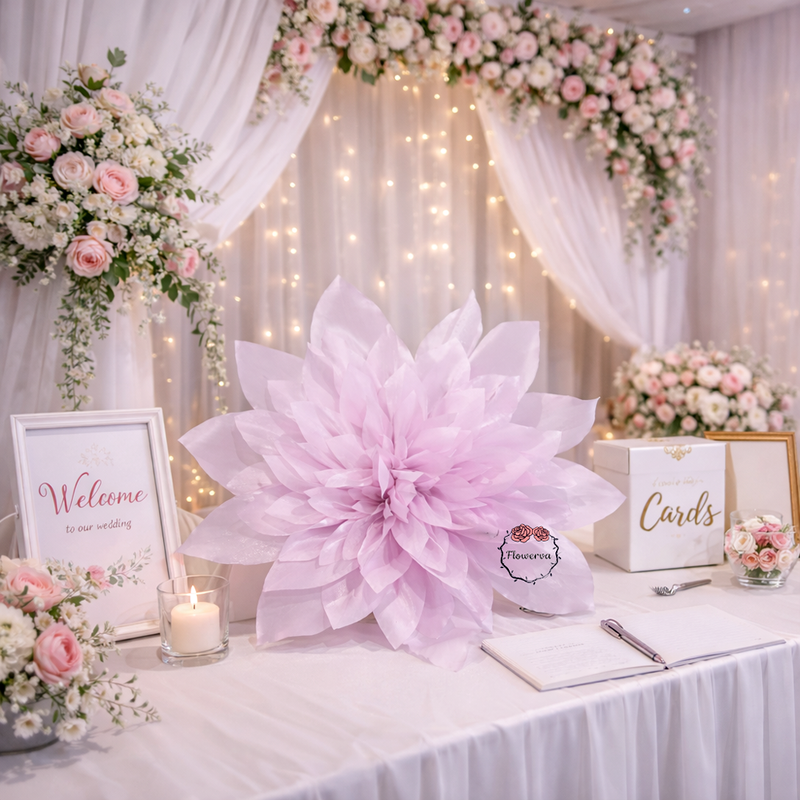
For a soft romantic atmosphere, consider a palette of light pink, ivory, champagne, and subtle pearl tones, paired with flowing fabrics and gentle layers. For something more dramatic, larger floral forms can be combined with deeper colors, velvet textures, candlelight, and structured architectural details. The goal is not to follow a formula, but to create a visual language that feels intentional from the moment guests enter the venue.
Let One Area Become the Statement
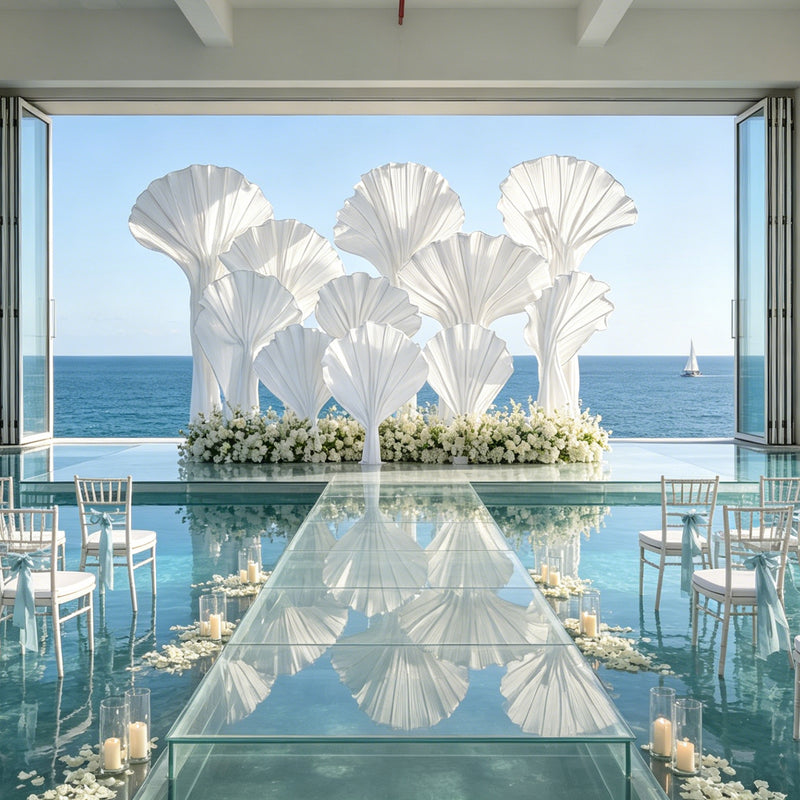
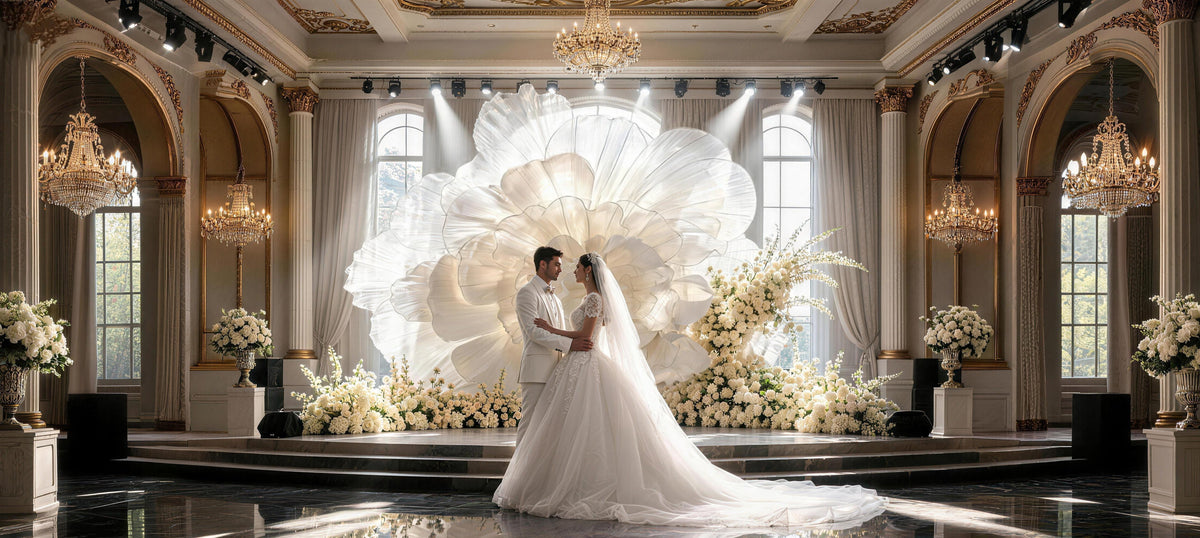
Luxury does not necessarily come from decorating every available surface. In many cases, a stronger result comes from choosing one or two areas where the flowers can make a meaningful visual statement. A ceremony backdrop, entrance, staircase, sweetheart table, or reception stage can become the central floral moment of the celebration.
Statement floral design works particularly well when the surrounding space is allowed to breathe. A large installation becomes more powerful when it has enough visual space around it to be appreciated. Instead of filling the entire room with flowers, consider creating one memorable focal point and allowing smaller floral details to echo that design elsewhere.
Play With Scale and Proportion
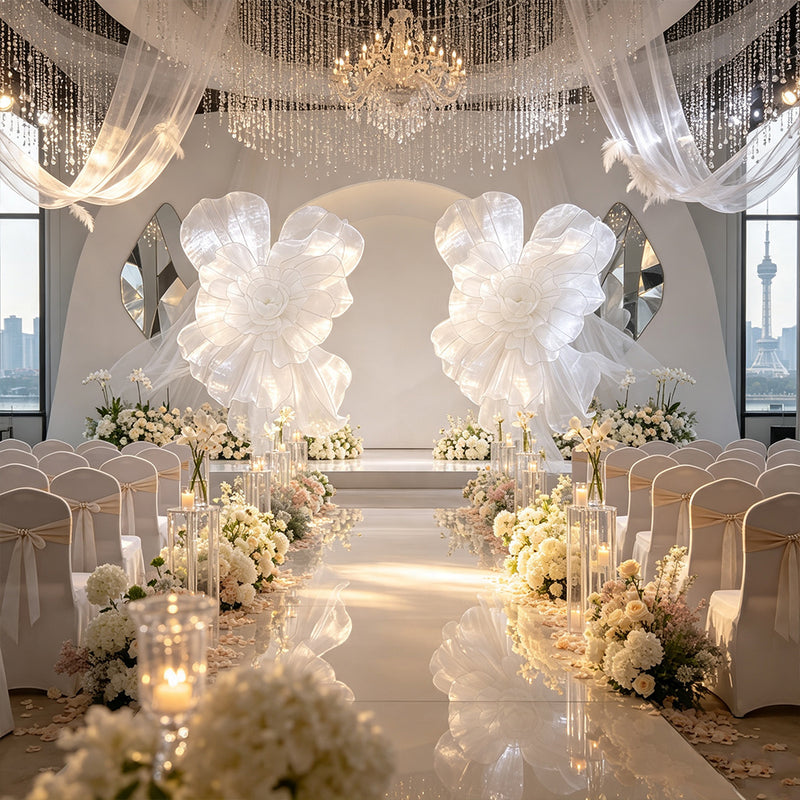
One of the greatest strengths of fabric flowers is the freedom to experiment with scale. A single oversized bloom can create the same visual impact as a much larger collection of smaller decorative elements, while a group of different-sized flowers can introduce movement and depth.
When styling a large venue, larger flowers can help balance tall ceilings, wide walls, and generous architectural proportions. In a smaller space, a carefully placed cluster of medium or delicate blooms may create enough impact without making the room feel crowded. Mixing sizes can also prevent the design from appearing too uniform and give the arrangement a more natural rhythm.
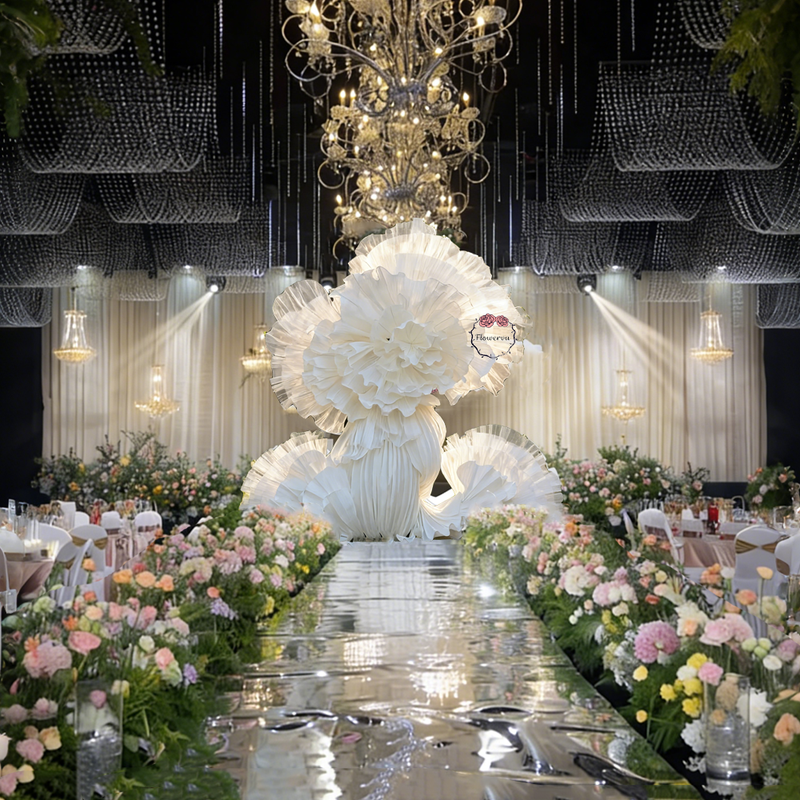
Consider the relationship between the flowers and everything around them. A floral installation should feel proportional to the ceremony structure, dining tables, furniture, and ceiling height. Scale should always serve the space, rather than compete with it.
Keep the Color Palette Refined
A luxury wedding does not need a complicated color palette. In fact, a limited selection of carefully chosen tones can often make floral styling feel more elevated. Start with one primary floral color and build around it with supporting shades that provide contrast without competing for attention.
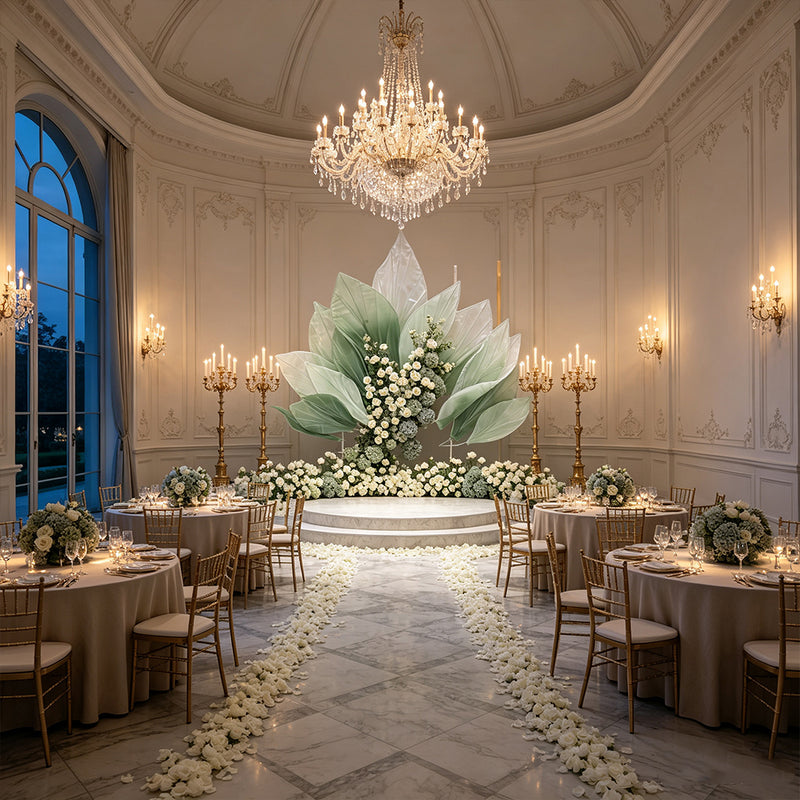
Soft pink can become more sophisticated when paired with warm ivory and champagne rather than surrounded by too many bright colors. White flowers can gain depth through cream, pearl, or soft beige. Richer palettes can combine muted plum, burgundy, dusty blue, or botanical green with neutral tones. The important thing is to create visual continuity so that the flowers feel connected across different areas of the wedding.
Repeating the same color in several forms can also make the event feel more cohesive. A shade used in the ceremony flowers can return subtly in the reception arrangements, welcome area, cake display, or bridal bouquet without requiring every arrangement to look identical.
Create Movement Instead of Perfect Symmetry
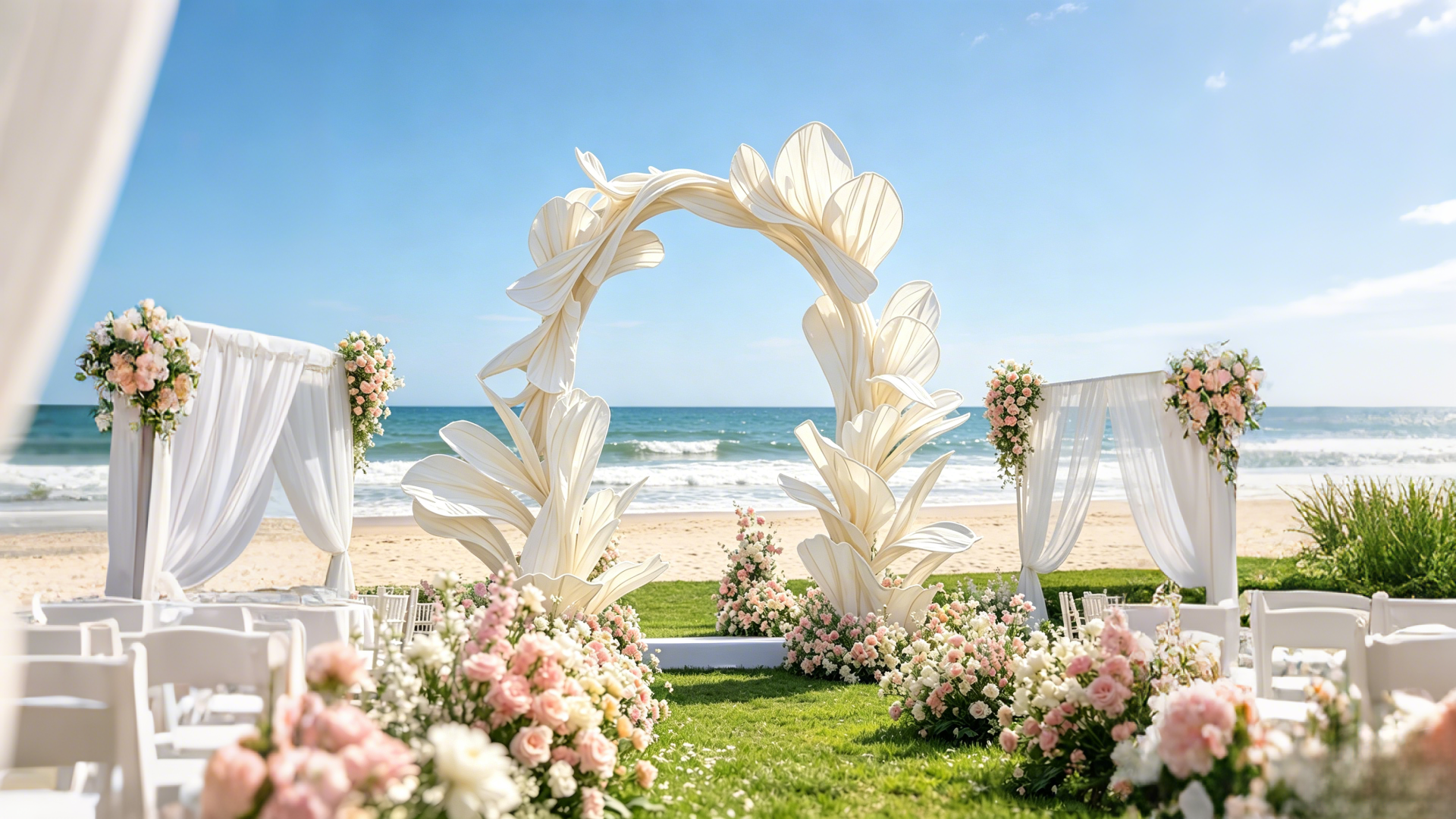
Perfect symmetry can create a formal and structured appearance, but modern wedding styling often benefits from a little movement. Flowers can extend outward, overlap, rise above one another, or fall naturally to create a sense of flow.
This does not mean that an arrangement should look random. The strongest compositions usually have an underlying structure, with intentional variation in height, direction, and density. Controlled asymmetry can make a floral installation feel more artistic and contemporary while still maintaining the polished appearance of a luxury event.
Bring the Same Floral Language to the Tables
Reception tables are an opportunity to continue the visual language established by the larger installations. Rather than creating completely separate designs, take one or two recognizable elements from the ceremony or entrance and reinterpret them at a smaller scale.
A large floral installation might inspire the shape of a centerpiece. A particular petal style might appear as individual flowers across a long banquet table. A soft pink palette used behind the couple can return through table flowers, textiles, and small decorative details. This approach creates consistency without repetition.
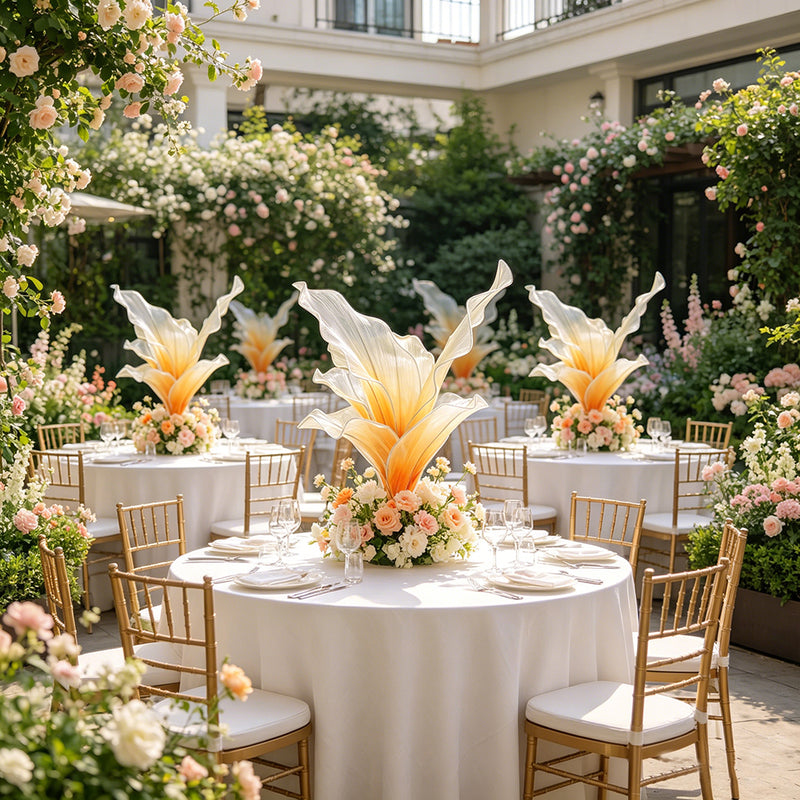
Table styling should also take the guest experience into account. Floral arrangements should leave enough space for dining, conversation, and movement, while their height and placement should be considered from the perspective of guests seated around the table.
Think Beyond the Traditional Bouquet
A bridal bouquet does not have to follow the traditional shape of a fresh-flower arrangement. Fabric flowers make it possible to explore more sculptural silhouettes, unusual proportions, monochromatic compositions, and dramatic oversized petals.
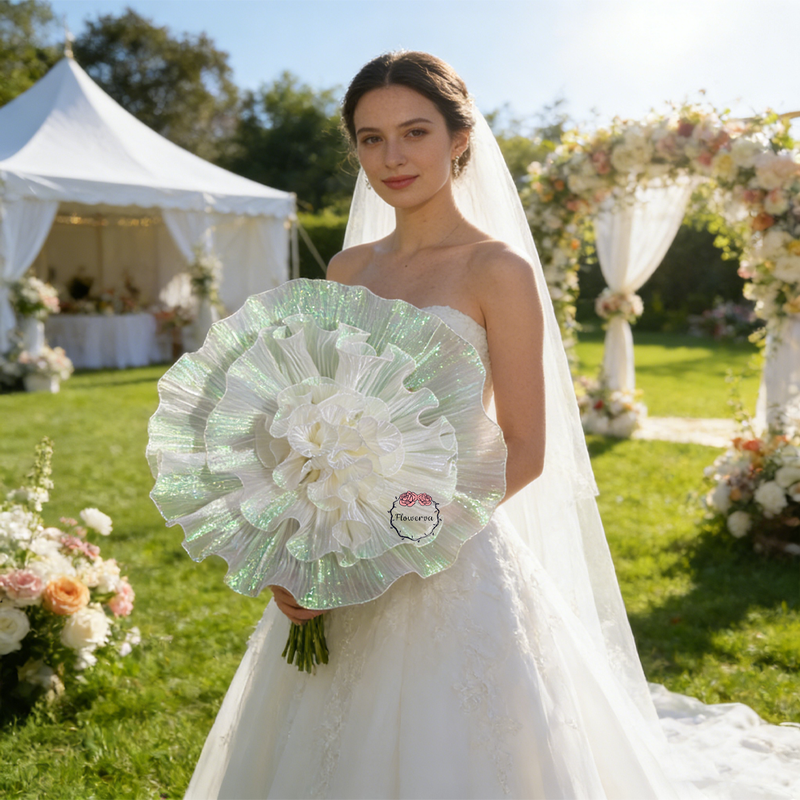
A structured bouquet can feel modern and editorial, while a softer arrangement with layered petals and flowing ribbons can create a more romantic effect. Because fabric flowers can be preserved, the bouquet can also become a lasting part of the couple's story rather than something that disappears shortly after the celebration.
Use Flowers in Unexpected Places
One way to make a wedding feel more distinctive is to move flowers beyond the locations where guests expect to see them. Consider floral details around an entrance, along a staircase, above a dining area, around a bar, beside a seating display, or integrated into an architectural feature of the venue.
Unexpected placement can make even a familiar floral design feel new. A small cluster positioned at eye level can create an intimate detail, while flowers suspended above guests can change the way the entire room is perceived. The objective is not simply to find more places to put flowers, but to use them where they can change the character of the space.
Balance Drama With Simplicity
A dramatic floral installation becomes more effective when it is surrounded by simpler elements. If the flowers already have a strong shape, the furniture and tableware can remain relatively restrained. If the color palette is rich, the surrounding textures can be quieter. This balance prevents the design from becoming visually overwhelming.
The same principle works in reverse. A minimalist venue can support a more expressive floral installation because the architecture provides a calm background. Contrast creates emphasis, and knowing where to simplify can be just as important as knowing where to add detail.
Design for the Entire Experience
Beautiful floral styling should work both in photographs and in real life. Guests should be able to move comfortably through the space, see one another across tables, and experience the atmosphere without feeling surrounded by decoration. Large installations should be planned with entrances, walkways, seating, lighting, photography, and venue restrictions in mind.
This is where thoughtful styling becomes part of event design rather than simply decoration. When the flowers are considered alongside the way people move through the venue, every visual moment becomes more intentional. The result is a celebration that feels beautiful from every perspective, not only from the camera.
Make the Flowers Part of the Story
The most successful wedding designs often have a sense of progression. Guests might first encounter a subtle floral detail at the entrance, then discover a more dramatic installation during the ceremony, followed by softer arrangements at dinner. Each area can have its own character while still belonging to the same visual story.
Fabric flowers are particularly suited to this approach because they can take on many different forms. The same material can become an oversized statement piece, a delicate table detail, a sculptural bouquet, or a decorative accent. This flexibility allows the floral concept to evolve throughout the event without losing its identity.
Make It Personal
Trends can provide inspiration, but the most memorable weddings are rarely the ones that simply reproduce a popular look. Personal details are what make a celebration feel meaningful. Consider the colors that already exist in the couple's world, the architecture of the venue, the atmosphere they want guests to remember, and the types of shapes and textures that naturally reflect their style.
Fabric flowers give designers and couples the freedom to create something that feels less predictable. They can be arranged in traditional ways or transformed into something completely unexpected. They can be soft and romantic, sculptural and modern, dramatic and theatrical, or deliberately understated.
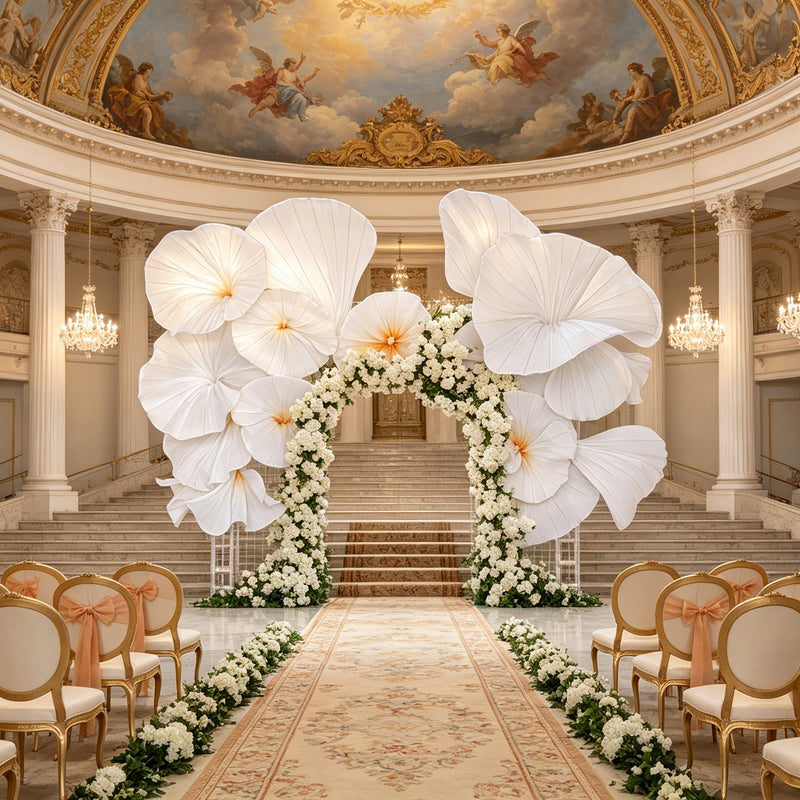
Ultimately, styling fabric flowers for a modern luxury wedding is about finding the right balance between beauty, scale, texture, color, and intention. When every element has a reason to be there, the flowers become more than decoration. They become part of the atmosphere, part of the architecture, and part of the memory guests take away from the celebration.

Hinterlasse einen Kommentar
Diese Website ist durch hCaptcha geschützt und es gelten die allgemeinen Geschäftsbedingungen und Datenschutzbestimmungen von hCaptcha.