

The Art of Fabric Flowers: How Different Materials Create Different Blooms
Not all fabric flowers are the same. Walk into any home decor store or scroll through an online marketplace, and the difference in quality is immediately obvious. Some fabric flowers look almost alive, with delicate petals that catch the light just right. Others look exactly like what they are — cheap imitations made from materials that were never meant to fool anyone's eyes.
The difference comes down to one thing: the fabric.
This guide is designed to help customers choose the right material for their needs. Whether you are planning a wedding, decorating a home, or designing an event space, understanding how each fabric behaves will help you make a better decision. Below is a breakdown of ten different fabrics, the flower shapes they work best for, and the finished look you can expect from each one.
Organza is a classic choice for fabric flowers, and for good reason. It is lightweight, slightly stiff, and holds its shape better than almost any other material. When pleated, organza takes on an extra layer of texture that mimics the natural folds and creases found in real flower petals.

Best for: Roses, peonies, and camellias. The structured pleats create the layered, dimensional look that these flowers are known for. Great organ pleated fabric also works well for statement blooms that need to hold their form without additional wiring or support.

Finished look: Elegant, structured, and realistic. These flowers read as classic and refined, perfect for formal weddings or traditional home decor.
Sometimes a flower needs to make a statement. Gold foil pleated fabric does exactly that. The metallic finish catches light from across the room, drawing the eye immediately to any arrangement made from this material.
Best for: Modern, sculptural blooms and tropical flowers like birds of paradise or heliconia. The metallic finish also works beautifully for holiday-specific shapes like poinsettias or ornamental stars. A single gold foil bloom can serve as a table centerpiece all on its own.

Finished look: Glamorous, bold, and attention-grabbing. These flowers are not subtle — they are meant to be noticed and remembered.
Not every flower needs to look like something that grows in a garden. Decor printmaking fabric opens up a completely different creative direction. This material features printed patterns and designs, meaning the "petals" can include stripes, dots, abstract shapes, or even small illustrated scenes.

Best for: Abstract flowers, whimsical garden styles, and children's event decorations. The printed patterns allow for flowers that match specific themes — a wedding with a blue-and-white porcelain motif, a brand launch with custom logo colors, or a birthday party with illustrated animal faces hidden in the petals.
Finished look: Playful, artistic, and unique. These flowers are conversation starters, not background filler.
There is something special about the way light moves across a pearlescent surface. Brilliant pearlescent fabric captures this effect perfectly, shifting between soft pinks, creams, and silvery whites as the angle of the light changes.

Best for: Wedding bouquets, romantic centerpieces, and soft cascading arrangements. The pearlescent finish is particularly flattering on open blooms like garden roses, lotus flowers, and magnolias. It also pairs well with other materials, adding a subtle glow without overwhelming the rest of the arrangement.
Finished look: Soft, romantic, and ethereal. These flowers feel dreamy and photograph beautifully in natural light.
Fresh flowers rarely come in a single, flat color. Most blooms have subtle variations — darker at the center, lighter at the edges, or shifting between two shades across the length of the petal. Gradient color material replicates this natural variation.

Best for: Realistic-looking flowers where color depth matters. Gradient material excels at creating orchids, irises, tulips, and any flower with natural color transitions from base to tip. The fabric also works beautifully for ombre effects in large installations.
Finished look: Natural, dimensional, and surprisingly realistic. These flowers are often mistaken for fresh blooms at first glance.
Shine can be a tricky thing in fabric flowers. Too much, and the flowers look cheap and plastic. Just the right amount, and they feel luxurious and intentional. Glossy pleated fabric hits that sweet spot.

Best for: Anthuriums, calla lilies, and other flowers with naturally waxy, glossy surfaces. The pleated texture adds visual interest while the gloss provides the sheen that makes these flowers recognizable. A single glossy calla lily in a tall vase makes a striking statement.

Finished look: Modern, sleek, and polished. These flowers work well in contemporary spaces and minimalist arrangements.
The name alone suggests something special. Mermaid-tail pleated fabric features dramatic, sweeping pleats that curve and flow like the tail of a mythical creature. This is not a subtle material.

Best for: Large, dramatic blooms that serve as focal points. Think oversized peonies, artichoke-style thistles, or abstract sculptural flowers that don't mimic any real species. The sweeping pleats also work beautifully for hanging installations.
Finished look: Dramatic, sculptural, and unforgettable. These flowers anchor a room and demand attention.
Organza is already known for its lightness and structure. Add a crystal-like finish, and the material takes on an entirely new character. Crystal shining organza sparkles in direct light, catching reflections the way a fresh dewdrop might catch the morning sun.

Best for: Evening events, winter weddings, and any celebration where light plays a central role. The material works well for delicate blooms like cherry blossoms, baby's breath, and smaller filler flowers.
Finished look: Magical, sparkling, and festive. These flowers shine brightest under candlelight or chandeliers.
This fabric sits somewhere between metallic and matte, with a finish that reads as sophisticated rather than flashy. Metal pearl texture fabric has a soft, pearl-like sheen with just a hint of metallic depth.

Best for: Contemporary and minimalist designs. The muted sheen works beautifully for large, simple shapes like single-petal kenzan flowers or abstract geometric blooms. It also excels at creating foliage and leaves that feel modern.
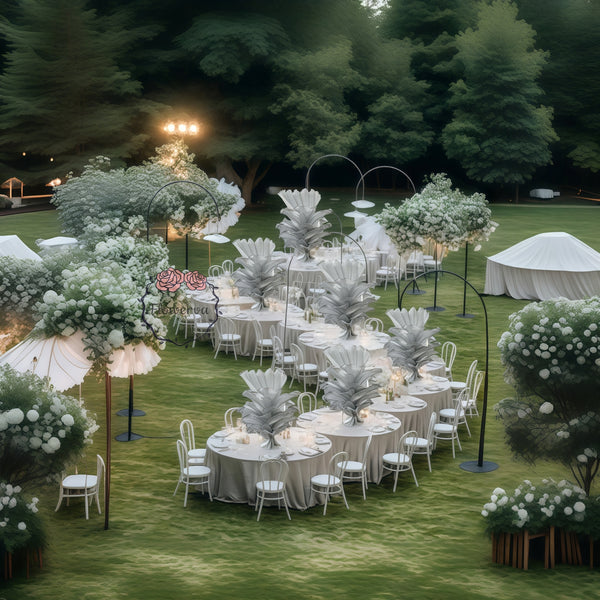
Finished look: Sophisticated, understated, and quietly luxurious. These flowers reward close attention.
Most fabric flower materials are chosen for their structure. They hold their shape, resist crushing, and photograph well. Milk elastic drapery takes the opposite approach.

Best for: Soft, flowing flowers where movement is part of the design. Think poppies with petals that flutter in the breeze, or large-scale installations where the flowers are meant to sway gently. The stretchy quality also makes it ideal for wrapping around foam bases.

Finished look: Soft, organic, and alive. These flowers move naturally and feel less rigid than other fabric blooms.
How to Use This Guide
Choosing the right fabric for your flowers comes down to what you need them to do. A bride carrying a bouquet for a six-hour wedding day needs structured materials that won't crush or wilt. A restaurant installing flowers in a breezy outdoor patio might want softer materials that move naturally. A holiday display might call for metallic finishes that catch every ray of light.
Use this guide to match your needs to the right material. If you need help deciding, reach out — we are happy to recommend fabrics based on your specific project.