
How to Design a Wedding Space That Feels Cohesive
A beautifully designed wedding is rarely remembered because every corner was filled with decoration. What guests tend to remember is the feeling that everything belonged together — the ceremony, the reception, the color palette, the materials, and the details all seemed to speak the same visual language. That sense of cohesion is what allows a wedding to feel considered rather than simply decorated.

Creating that feeling begins with understanding the relationship between each space. Instead of treating the entrance, ceremony, cocktail area, and reception as completely separate design moments, they can be connected through a consistent combination of color, texture, form, and proportion. The result does not need to look identical from one area to the next; it simply needs to feel like part of the same story.
Begin With One Clear Visual Direction
Before choosing individual decorative pieces, it helps to establish a clear visual direction for the wedding as a whole. This might begin with a particular color family, a distinctive material, a sculptural shape, or a single statement installation that captures the atmosphere of the celebration.
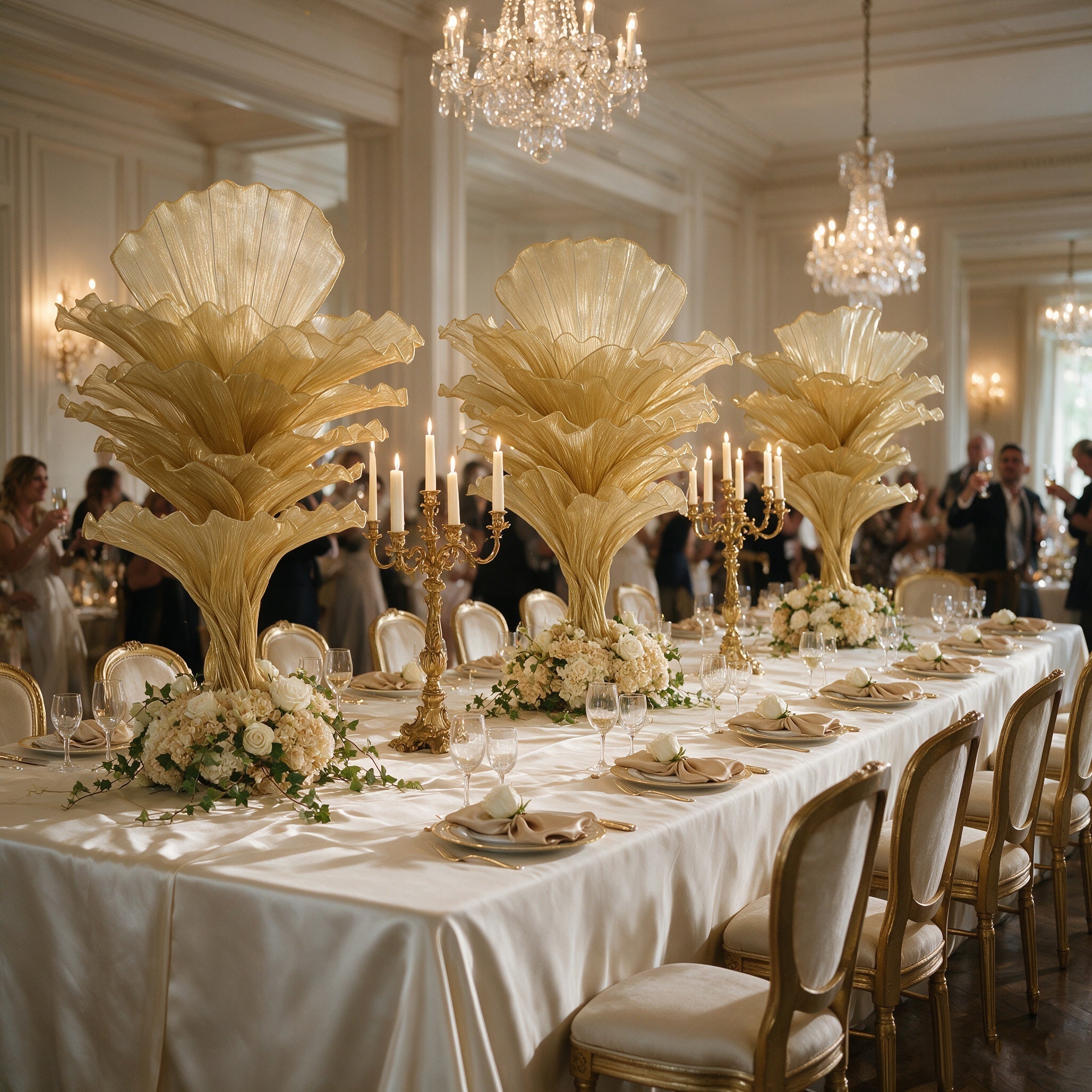
Once that direction is clear, other decisions become easier. Table pieces, ceremony elements, backdrops, and smaller details can support the same concept rather than competing with one another. A strong design language creates consistency without requiring every element to look exactly the same.
Let One Element Lead the Story
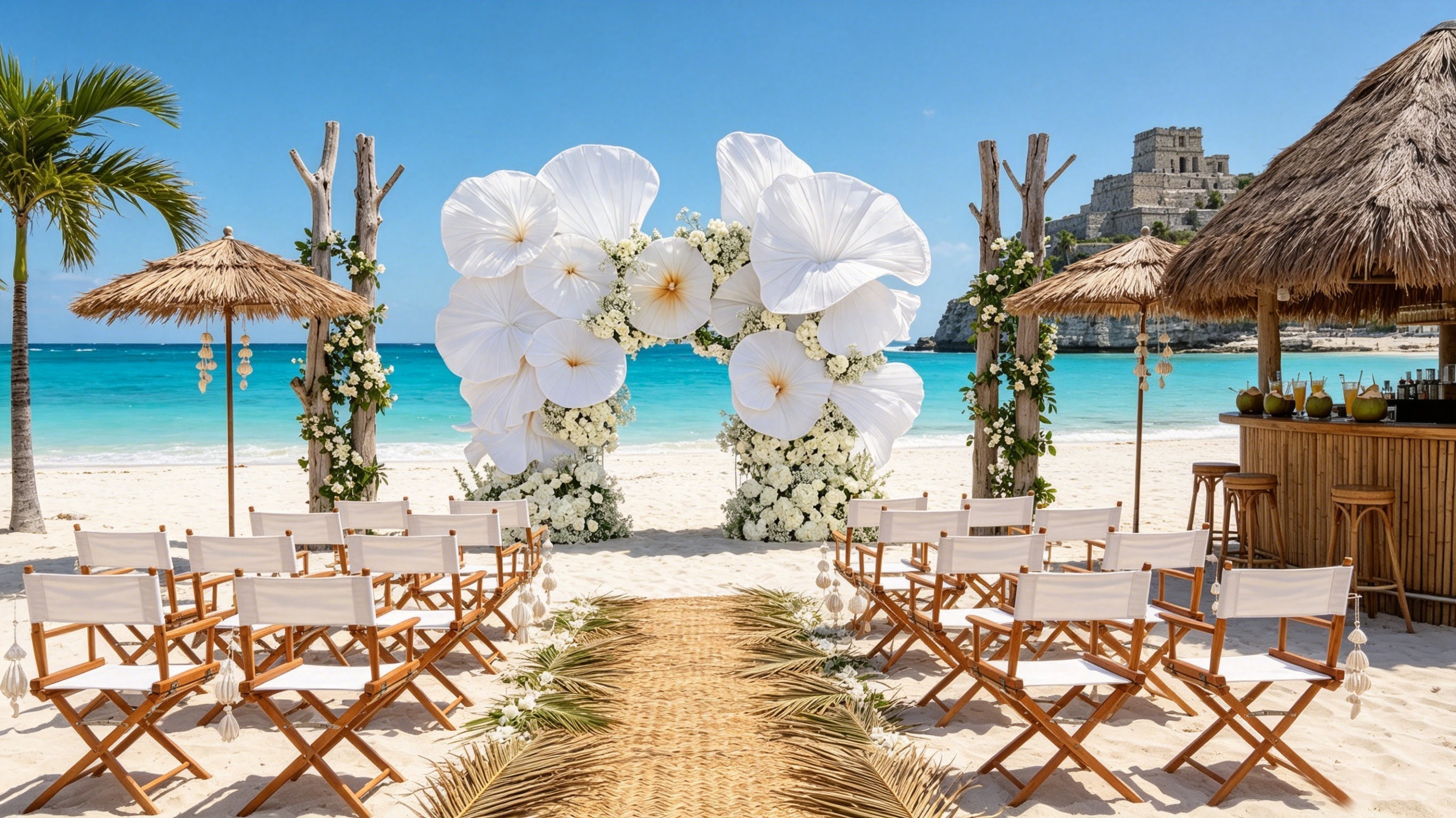
A cohesive wedding does not need dozens of equally strong focal points. In many cases, one distinctive visual element can establish the design language for the entire event. A sculptural backdrop, oversized fabric flower, or statement entrance can introduce a shape, color, or texture that is later echoed in smaller details throughout the celebration.

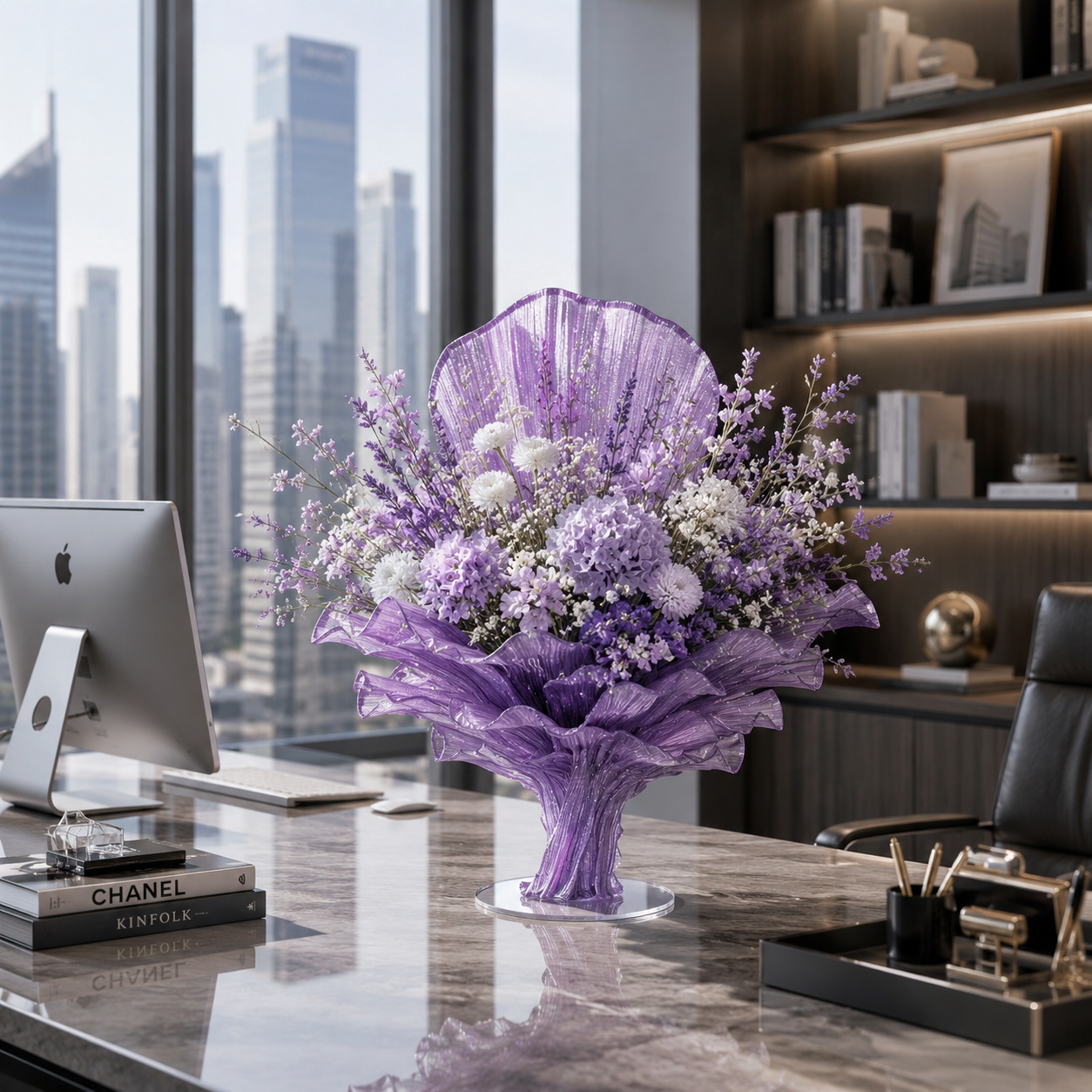
At Flowerva, this approach works particularly well with handcrafted fabric flowers. A larger floral form can become the visual anchor of a ceremony or reception, while smaller pieces in related colors or structures can continue the same aesthetic across tables, welcome areas, or other parts of the venue.
Use Color as a Connection
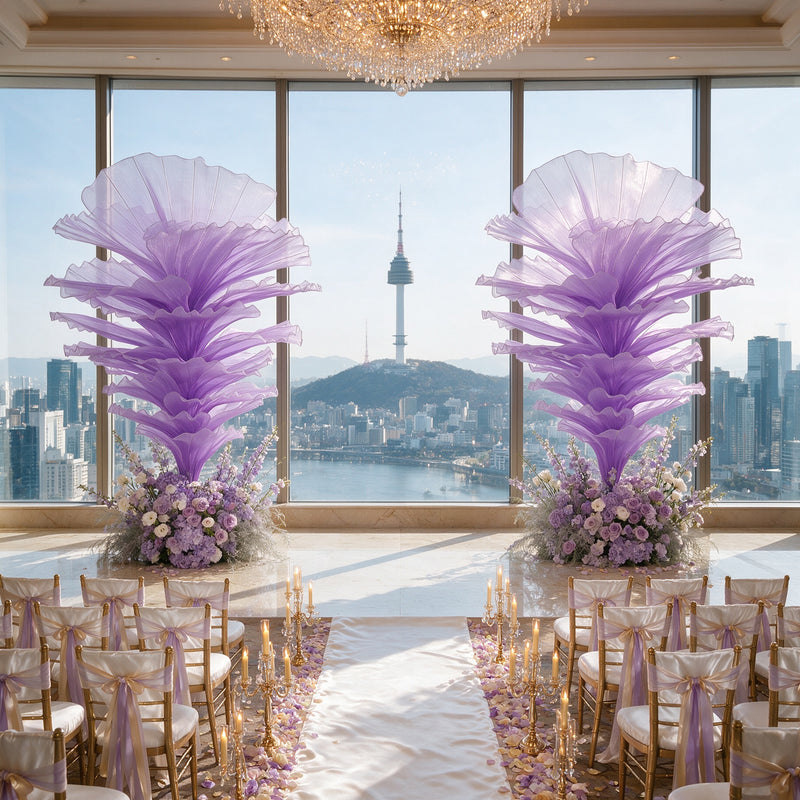
Color is one of the simplest ways to connect different parts of a wedding. A carefully selected palette can move from the ceremony into the reception without requiring exactly the same decorative treatment in both spaces.
A deep blue used in a statement installation might reappear more subtly in table details. Champagne tones can soften both a ceremony backdrop and reception styling, while ivory or white can create a quieter foundation that allows texture and form to become more visible.

Flowerva custom color options make it possible to develop fabric floral elements around a specific wedding palette rather than trying to force an existing color into the concept. This gives designers more control over how visual continuity is created across the venue.
Repeat the Language, Not the Exact Design
Repetition can create consistency, but repeating the exact same decorative piece everywhere can quickly make a wedding feel predictable. A more refined approach is to repeat the design language rather than the object itself.

The same petal shape might appear in several different scales. A texture introduced in a large ceremony installation can reappear more subtly in a reception piece. Similar colors can be used in different proportions depending on the function of each area.
This creates a sense of familiarity as guests move through the celebration while allowing each space to retain its own identity.
Think About Scale From Space to Space
Different parts of a wedding require different levels of visual presence. A ceremony wall may need a large installation to balance the architecture of the venue, while a dining table benefits from a more controlled composition that allows conversation and movement to remain comfortable.
Scale therefore becomes an important tool for creating hierarchy. The largest pieces can identify the most important moments, while smaller forms support the overall concept without competing for attention. This variation allows the design to feel dynamic while remaining visually connected.
Flowerva's different flower sizes and structures allow a single creative direction to move between intimate and large-scale applications, making it easier to build a consistent visual experience across different areas of the venue.
Texture Can Hold the Design Together
Cohesion is not created through color alone. Material can also become a recurring thread throughout a wedding. Pleated fabric, layered surfaces, soft folds, and sculptural forms can introduce a recognizable texture even when the individual pieces vary in size or placement.
Flowerva handcrafted fabric flowers use textile as part of the design itself. The folds and layers of the material create depth under different lighting conditions, while the repeated use of similar textures can connect larger installations with smaller decorative elements.

This is particularly effective in luxury wedding environments, where subtle material relationships often create a more refined impression than simply repeating the same color everywhere.
Allow Each Space to Have Its Own Moment
A cohesive wedding should still have contrast. If every area has the same visual intensity, the event can begin to feel flat. The ceremony may deserve the strongest statement, while the reception can feel warmer and more intimate. An entrance can create anticipation, while table details can reward guests with smaller moments of craftsmanship.
The important thing is that these differences feel intentional. When the same visual language continues through color, texture, or form, each space can have its own personality without feeling disconnected from the rest of the celebration.
Design the Wedding as One Experience
The most successful wedding spaces are not created by choosing each decorative element independently. They are developed by considering how guests will move from one moment to the next and how the visual identity of the celebration can continue throughout that journey.

At Flowerva, we create handcrafted fabric flowers, table pieces, statement forms, and large-scale installations that can be developed across different colors, sizes, and structures. This flexibility allows planners and designers to build a wedding environment around one creative direction while adapting each floral element to the specific needs of the space.
A cohesive wedding does not need every detail to match. It needs every detail to feel connected.
When color, texture, scale, and form are considered together, the ceremony, reception, and surrounding spaces can become part of one complete visual story — creating a wedding that feels intentional from the first impression to the final moment.

Leave a comment
This site is protected by hCaptcha and the hCaptcha Privacy Policy and Terms of Service apply.