
Why Fabric Flowers Are Changing the Way Designers Think About Floral Decor
Floral design is changing. Across weddings, hospitality spaces, private celebrations, and brand events, designers are moving beyond traditional arrangements and looking for ways to create stronger visual identities through scale, texture, and form. Within this shift, fabric flowers are becoming an increasingly interesting material for creating decorative elements that feel distinctive, dimensional, and highly adaptable.

The change is not simply about replacing one type of flower with another. It is about reconsidering what a floral element can be. Instead of treating flowers only as arrangements placed inside a space, designers can use handcrafted fabric flowers as sculptural objects, architectural details, statement centerpieces, and large-scale installations.
The Flower Is Becoming Part of the Design
Traditional floral decoration often works within the natural proportions and characteristics of the flower itself. Fabric flowers offer a different starting point. Because fabric can be folded, pleated, layered, gathered, and shaped, the final form can be developed around the requirements of the space rather than being limited to the structure of a natural bloom.
This opens the door to larger petals, exaggerated proportions, unusual silhouettes, and more expressive compositions. A flower can become soft and delicate, highly sculptural, or intentionally dramatic depending on the material and construction. The result is a floral element that feels designed specifically for its environment.

Scale Creates a Different Kind of Impact
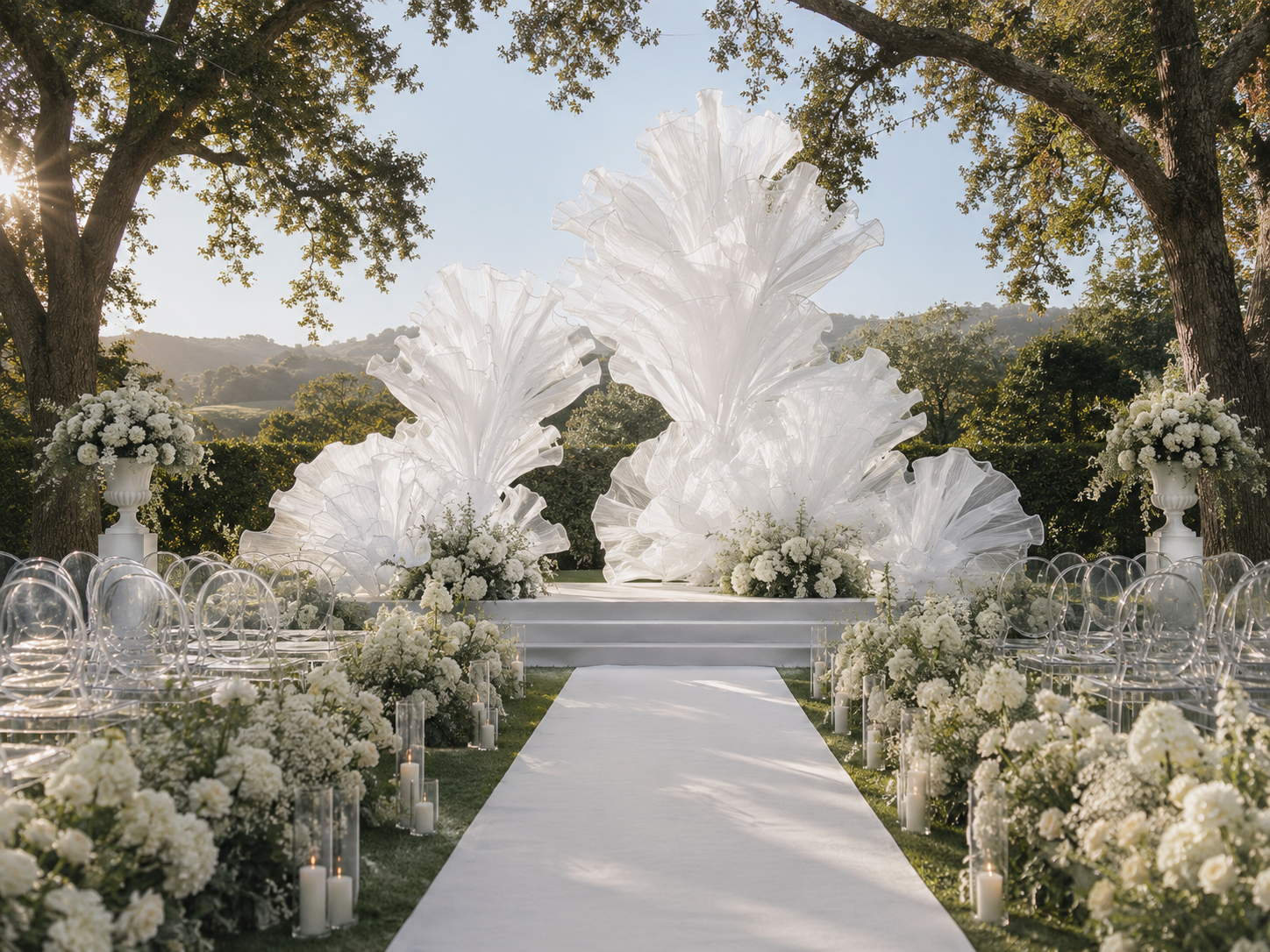
One of the strongest advantages of fabric flowers is the freedom to explore scale. Oversized flowers can create an immediate focal point in spaces where smaller arrangements might disappear. A single large bloom can define an entrance, frame a ceremony, or become the centerpiece of an event installation.

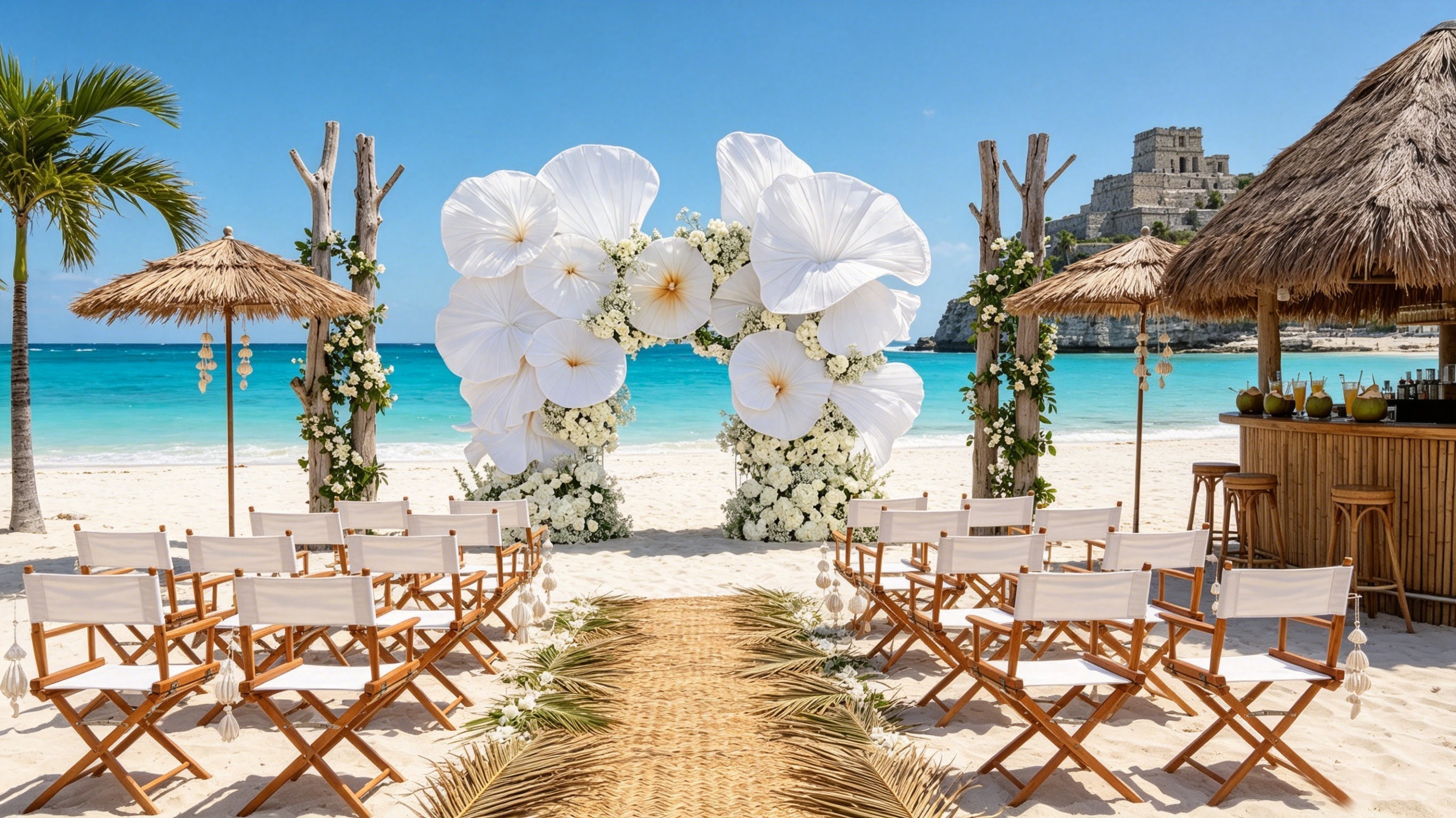
Large-scale floral forms are particularly effective when paired with simple architectural backgrounds. Against a clean wall, open venue, or modern interior, an oversized fabric flower can introduce softness and movement without creating visual clutter. The contrast between architectural structure and organic floral form can make the entire space feel more considered.
Texture Gives Fabric Flowers Their Character
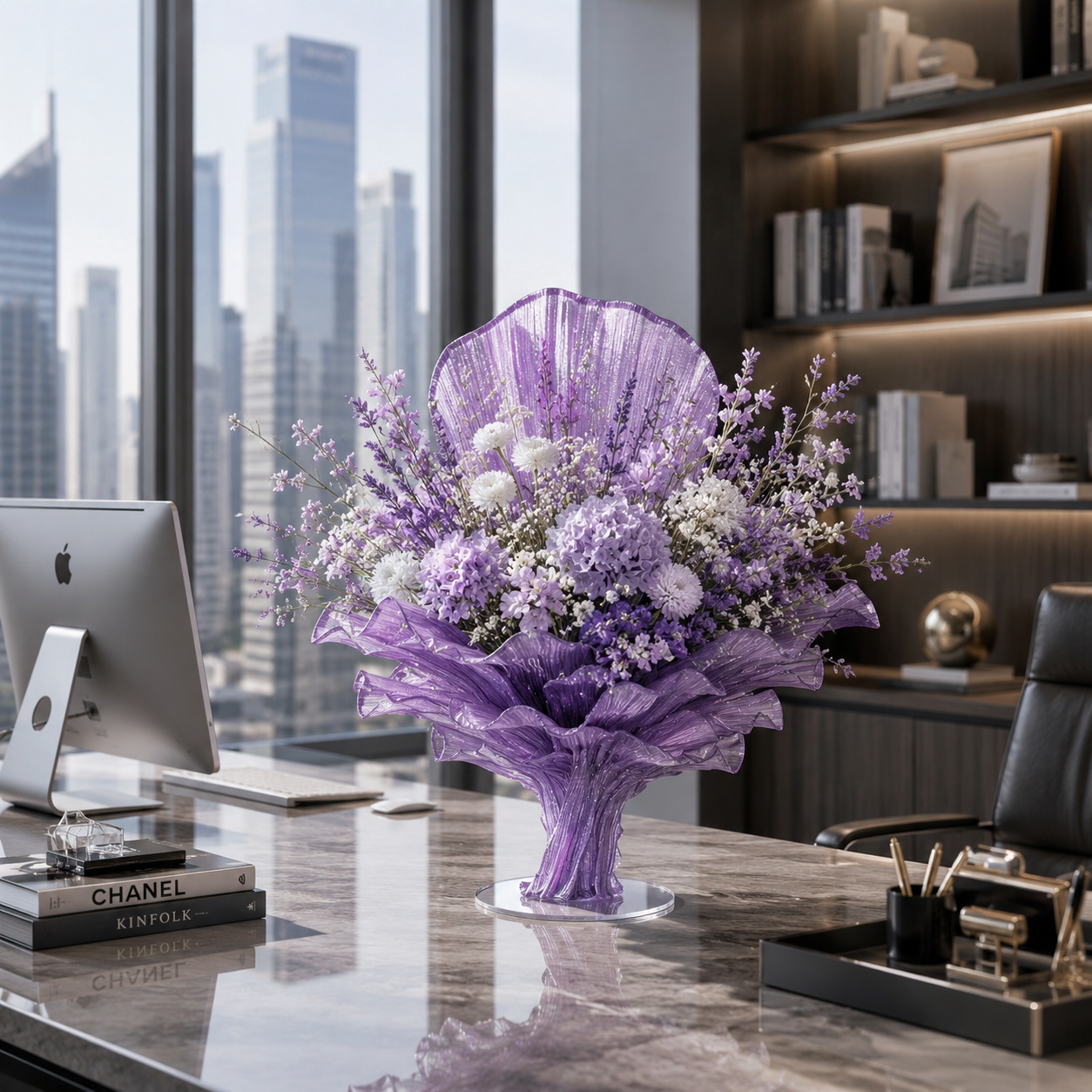
Color is only one part of the visual experience. Texture can influence how a floral installation looks under natural daylight, warm venue lighting, or professional event lighting. Pleated fabric, layered petals, soft folds, and dimensional surfaces create subtle changes in light and shadow that give the flower greater depth.

This tactile quality is one of the reasons fabric flowers work particularly well in contemporary event environments. The material itself becomes part of the visual story. Instead of looking flat or purely decorative, the petals can create a sense of movement and craftsmanship that becomes more noticeable as guests move through the space.
Customization Makes the Design More Personal
Modern events are increasingly moving away from standardized decoration. A wedding may be built around a particular architectural setting, a hotel project may require a specific visual identity, and a brand event may need decorative elements that reflect a campaign or creative direction. These projects often require more than selecting an existing arrangement from a catalog.

Fabric flowers provide greater freedom to develop custom colors, sizes, proportions, and floral structures. This allows the decorative element to respond to the concept rather than forcing the concept to adapt to an existing product. For designers and event professionals, that flexibility can make it easier to create spaces that feel individual rather than repetitive.
From Centerpieces to Large-Scale Installations
The possibilities of fabric flowers extend well beyond table decoration. A smaller floral composition can become a sculptural centerpiece, while larger forms can be used for ceremony backgrounds, entrance installations, standing flowers, hanging displays, and other statement pieces.

This range of applications makes it possible to build a visual connection throughout an event. A large installation can establish the main design language, while smaller fabric floral pieces can carry similar colors, textures, or petal forms into reception tables and surrounding spaces. The result feels connected without requiring every element to look exactly the same.
Designed for Different Spaces and Different Stories
A successful floral installation should respond to the environment around it. A large ballroom may benefit from dramatic proportions, while an intimate reception space may require a more controlled composition. Hospitality interiors, retail environments, photography spaces, and private celebrations each create different opportunities for floral design.
This is where the flexibility of handcrafted fabric flowers becomes especially valuable. The same design approach can be adapted to different environments while maintaining a recognizable visual identity. Scale, color, texture, and form can change according to the space, while the craftsmanship remains at the center of the design.

Why Reusability Matters in Modern Event Design
Event professionals are also considering how decorative elements can create value beyond a single occasion. A piece designed with flexibility in mind can be styled differently across multiple projects, allowing the same floral element to take on a new role in another environment.
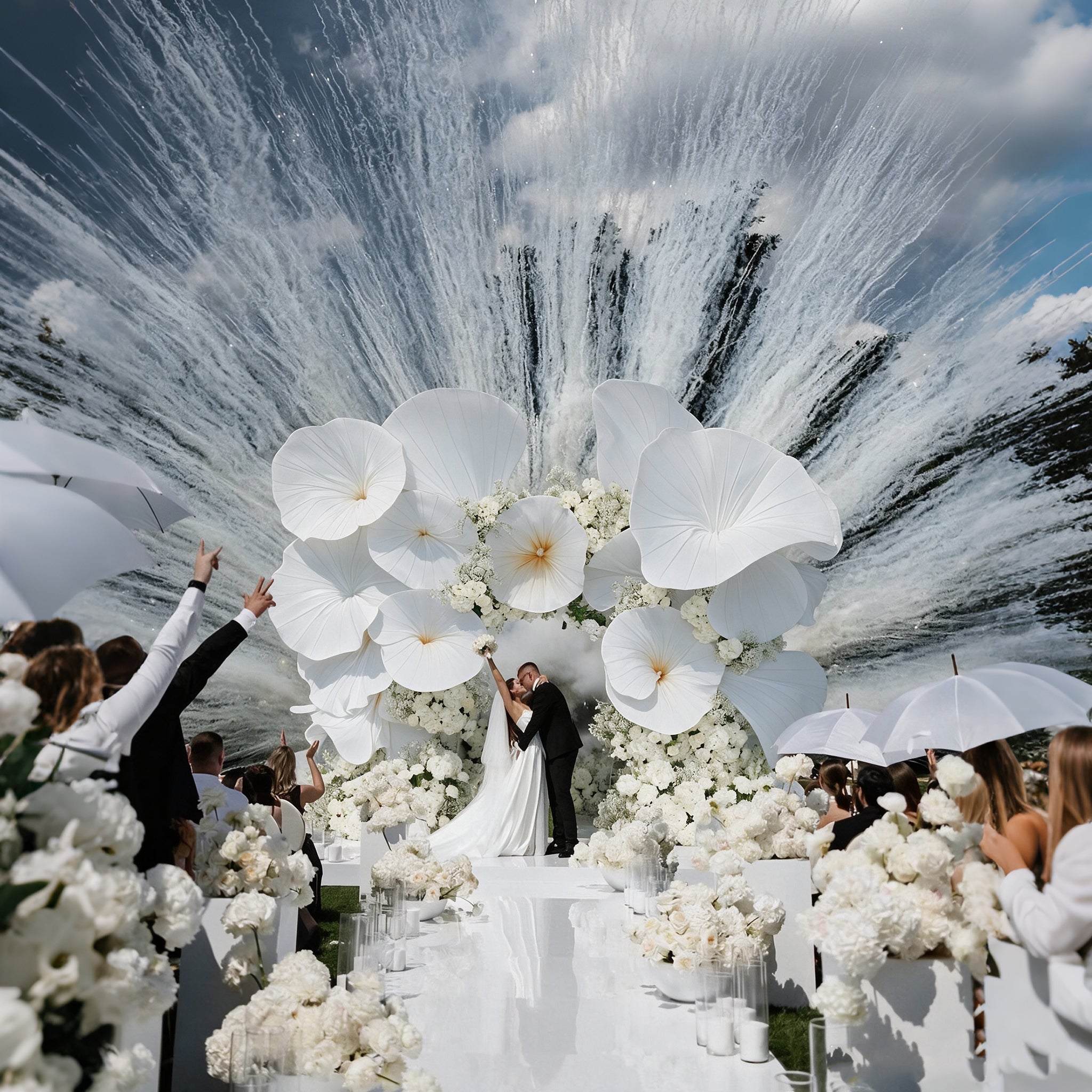
Fabric flowers can be particularly suitable for this approach because individual pieces can become part of different compositions. A floral installation used for a wedding can later be incorporated into a hospitality display, private celebration, photography setting, or another creative project. This ability to reinterpret a floral piece in different spaces adds another dimension to the design process.
The Future of Floral Design Is More Sculptural
As event design continues to become more visual and experience-focused, floral decoration is also moving toward more sculptural forms. Designers are looking for materials that can create strong silhouettes, dimensional textures, and memorable installations without relying entirely on traditional floral formulas.
Fabric flowers naturally fit into this direction. They combine the softness associated with flowers with the structure and flexibility of textile materials, creating opportunities for designs that can feel artistic while remaining functional for events and interior spaces.
A New Way to Think About Fabric Flowers
The growing interest in fabric flowers reflects a larger change in the way decorative objects are being designed. Flowers are no longer limited to traditional arrangements or familiar proportions. They can become large-scale sculptures, architectural accents, statement centerpieces, or visual landmarks within an event.

At Flowerva, handcrafted fabric flowers are developed with this broader perspective in mind. Through different materials, colors, sizes, and forms, each piece can become part of a larger design concept while retaining the detail and character of handmade craftsmanship.
Fabric flowers offer designers another way to think about floral decoration — not simply as something added to a space, but as something that can help define the space itself.
From an intimate centerpiece to an oversized installation, the possibilities begin with the material and continue through craftsmanship, proportion, and creative direction.

Leave a comment
This site is protected by hCaptcha and the hCaptcha Privacy Policy and Terms of Service apply.