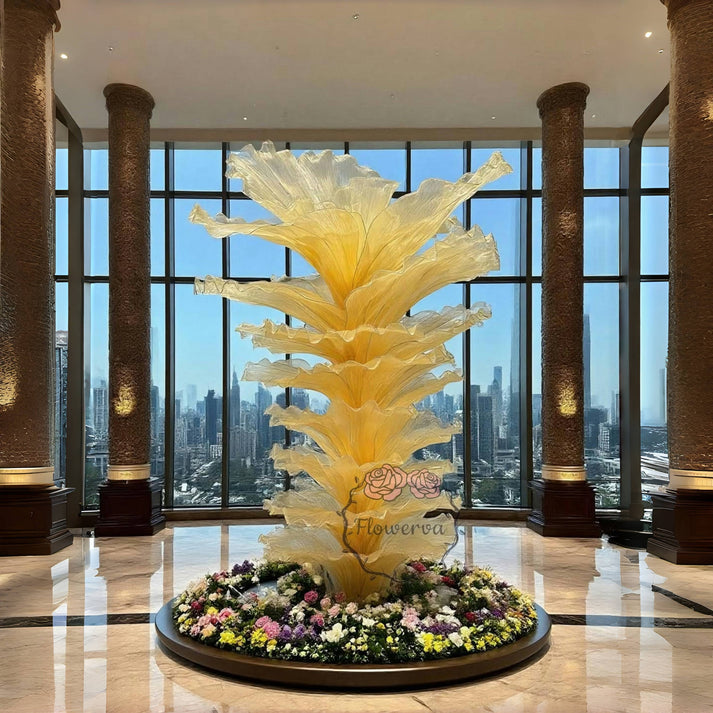
Everlasting Flowers Through Ages: Preserving Natural Beauty from Dried to Fabric Flowers
The beauty of fresh flowers lies in their vividness when in full bloom, yet it is marred by their fleeting blooming period. Since ancient times, humans have never ceased their attempts to "preserve natural beauty" — from the simplest dried flowers to exquisitely crafted wax flowers, and now to modern fabric flowers. Each form of "everlasting flower" is a response to the pursuit of "eternal beauty" in different eras, and also bears witness to the evolution of human craftsmanship and aesthetics.
I. Ancient Times to the Middle Ages: Dried Flowers, the Simple Starting Point of Preserving Natural Beauty
Humanity's earliest attempt at creating "everlasting flowers" was with dried flowers. Their emergence had nothing to do with sophisticated craftsmanship, but rather relied on natural conditions to extend the lifespan of flowers' forms.
Around 3000 BC in ancient Egypt, the lotus flower, symbolizing "rebirth", was picked from the banks of the Nile and naturally dried in arid tombs or temples, used for sacrificial rituals and as burial ornaments for pharaohs. Even today, in archaeological sites around the Egyptian pyramids, remnants of dried lotus bouquets can still be found — though they have long lost their vibrant colors, their withered forms carry the ancient Egyptians' wishes for eternal life.
During the same period, in China's Neolithic Age, ancestors would dry wild chrysanthemums, mugwort, and other plants and bury them alongside pottery and jade artifacts. This was both an expression of awe for nature and a simple recognition that "beauty can transcend life and death". By the Middle Ages, dried flowers began to enter daily life: in Europe, lavender and rosemary were dried and hung indoors, not only to mask odors caused by poor sanitary conditions but also as simple wall decorations; in China's Song Dynasty, literati popularized "arranging dried flowers in vases", placing dried plum blossoms and chrysanthemums in celadon vases, and endowing dried flowers with new aesthetic value through the artistic conception of "beauty in both bloom and wither".
At this stage, although dried flowers achieved "preservation", they were always constrained by natural conditions — their forms were prone to shrinkage, their colors to fading, making them more like "shadows of flowers" rather than a complete reproduction of beauty.
II. Early Modern Period: Wax Flowers, the Exquisite Replication of Natural Beauty Through Handicraft
From the 17th to the 19th century, with the refinement of handicraft techniques, humans were no longer satisfied with "passive preservation" and instead took the initiative to "replicate" the forms of fresh flowers through artificial craftsmanship. Thus, wax flowers emerged as the embryonic form of "artificial everlasting flowers".
In 17th-century Europe, the popularization of beeswax and paraffin provided the material foundation for wax flowers. Craftsmen dyed melted wax into colors such as rose red and lily white, either coating it on real plant skeletons or directly shaping the wax into the curves of petals, then assembling them into complete bouquets. These wax flowers were highly lifelike, even able to mimic the texture of petals, and once became a popular decoration in the British Victorian court — nobles placed wax roses and violets in their living rooms, avoiding the problem of fresh flowers wilting quickly while showcasing the delicacy of handcrafted art.
During the same period, in China's Qing Dynasty, a similar craft called "pith flowers" appeared: craftsmen used pith (the soft core of certain plant stems) as raw material, cutting it into thin slices, dyeing and shaping them to create lifelike peonies and crabapples, used for women's headdresses or household ornaments. Pith flowers were light in texture and bright in color, even able to simulate the translucency of petals, and once became a tribute to the imperial court, representing the pinnacle of artificial replication of natural beauty at that time.
However, both wax flowers and pith flowers had obvious limitations: wax flowers were fragile and prone to melting when heated, while pith flowers were susceptible to deformation from moisture. Additionally, both were expensive to produce, accessible only to a small segment of the population, and never made their way into ordinary households.
III. Modern Times: Fabric Flowers, Eternal Beauty From Replication to Transcendence
Since the 20th century, with the innovation of fabric technology and craftsmanship, fabric flowers have become the mainstream form of "everlasting flowers". They not only achieve precise replication of natural beauty but also break through the limitations of traditional "everlasting flowers", allowing beauty to exist in a more durable and diverse manner.

Early fabric flowers were mostly made from heavy fabrics, with stiff forms, more like "fabric ornaments" than "flowers". But with the emergence of new materials such as silk, mesh, and memory fabrics, the texture of fabric flowers began to approach that of fresh flowers: the luster of satin silk can replicate the softness of rose petals, the translucency of transparent mesh can mimic the lightness of lilies, and when paired with iron or plastic skeletons for shaping, the petals not only have natural curves but also maintain their form for a long time.

Today's fabric flowers are no longer merely about "replicating fresh flowers" — craftsmen use gradient dyeing to create color layers similar to real flowers, hand-pleating techniques to reproduce the natural texture of blooming flowers, and even produce large-scale fabric flower installations several meters high (such as decorations for wedding main stages), using sizes unattainable by real flowers to create a dreamy spatial atmosphere.
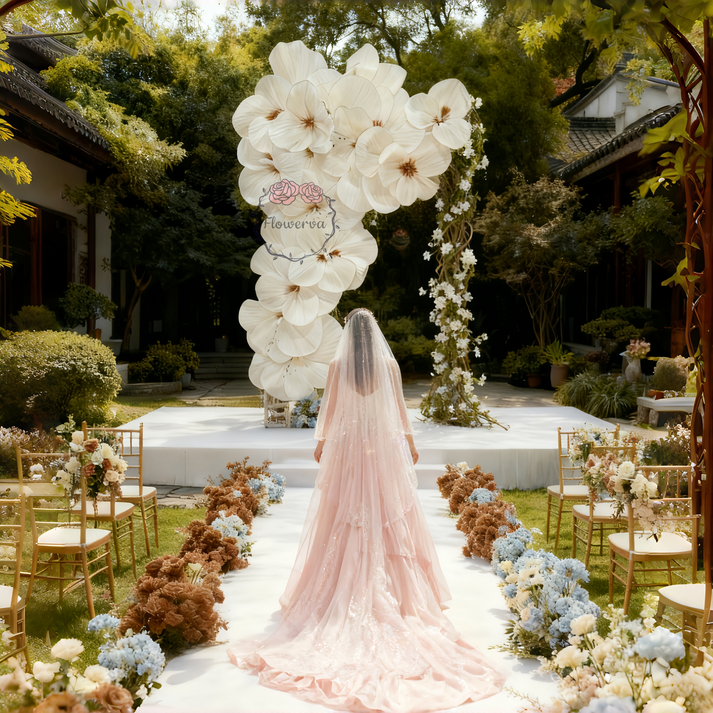
More importantly, fabric flowers have solved all the defects of dried and wax flowers: they are not easily deformed or faded, can be used for a long time, and have controllable production costs. They can serve as both daily home decorations and core installations for weddings and commercial displays. From "preserving natural beauty" to "creating new forms of beauty", fabric flowers have fulfilled humanity's thousand-year pursuit of eternal beauty.

From the simple preservation of dried flowers, to the exquisite replication of wax flowers, to the transcendent innovation of fabric flowers, humanity's attempts at creating "everlasting flowers" are essentially an obsession with "the eternity of beauty". The evolution of each form corresponds to the technological level and living needs of different eras, and modern fabric flowers are the most mature achievement of this thousand-year endeavor — they not only free natural beauty from the constraints of blooming periods but also transform beauty into a tangible, usable, and long-lasting part of human life.
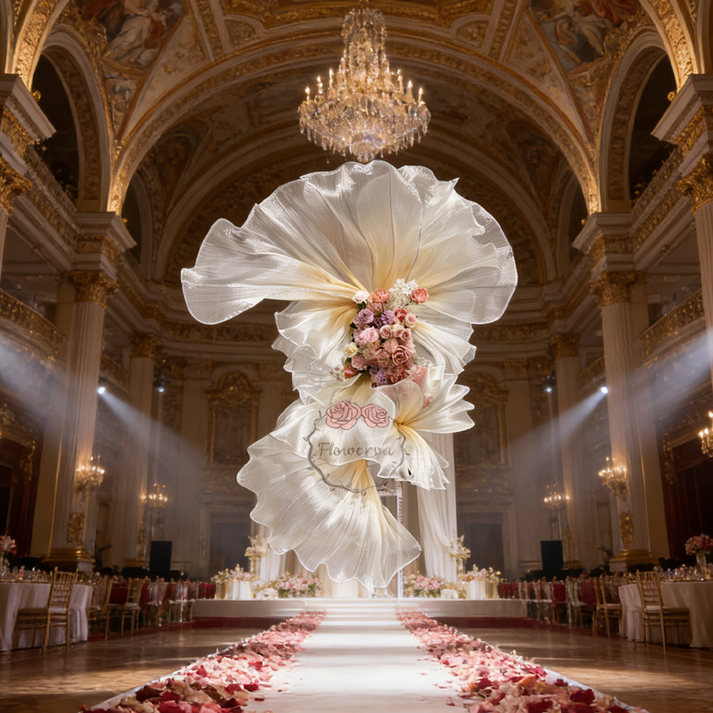
Flowerva fabric flowers are a vivid testament to this thousand-year pursuit of eternal natural beauty. Adhering to the philosophy of "blending nature with craftsmanship, and integrating beauty with sustainability", Flowerva selects premium materials such as high-quality silk and translucent mesh, which perfectly replicate the soft luster and light texture of fresh flowers. Each petal is meticulously crafted through hand-cutting, gradient dyeing and precise pleating, ensuring every flower retains the natural and vivid details of blooming fresh flowers, whether it’s the delicate layers of a rose or the airy lightness of baby's breath.
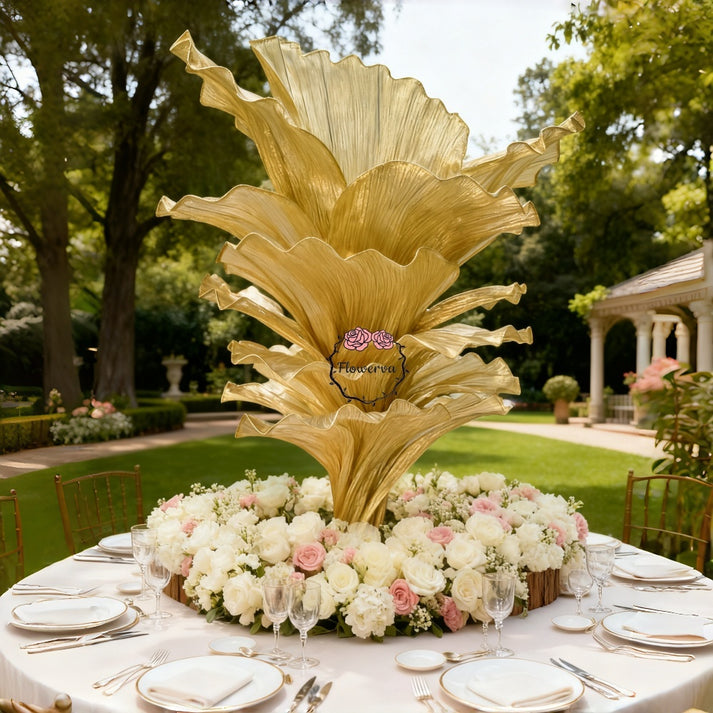
Beyond replicating natural beauty, Flowerva fabric flowers emphasize environmental friendliness and durability. Free from the constraints of blooming periods, they require no water or maintenance and can maintain their exquisite appearance for a long time, making them ideal for home decoration, weddings and commercial displays. As an inheritor of the "everlasting flower" craft, Flowerva continues the human tradition of preserving natural beauty while injecting modern aesthetic and sustainable concepts, allowing the timeless beauty of flowers to accompany people’s lives intimately and lastingly.